Dishwasher not cleaning properly: what to check before you pay for repair
Gritty glasses and food left on plates are often fixed with cleaning and loading changes. Work through these checks before you book a technician or shop for a new machine.
In this guide
Short answer: most "my dishwasher stopped cleaning" problems come from a clogged filter, blocked spray-arm holes, loading that stops water reaching the dishes, or detergent and water issues. Those are free to fix. If dishes come out cold and wet, a spray arm will not turn, or the machine does not fill, that points to a fault worth a technician's diagnosis. Dishwasher not cleaning well? Work through these checks before paying for a repair.
Key takeaways
- Clean the filter first. On many modern dishwashers it is a manual-clean filter at the bottom of the tub.
- Check that spray arms spin freely and their holes are clear.
- Load so tall items do not block the arms or the detergent dispenser.
- Use fresh detergent, rinse aid, and follow the manual for hard water.
- No heat, no fill or no spray after these checks is a job for a technician.
What this guide covers
Built-in and freestanding household dishwashers. These are user-maintenance steps of the kind manufacturers describe in their manuals. Always follow the manual for your model, and switch the dishwasher off before reaching inside.
Check 1: The filter
Food, grease and glass fragments collect in the filter. When it clogs, dirty water is recirculated and leaves grit on glasses.
- Switch off the dishwasher and let it cool.
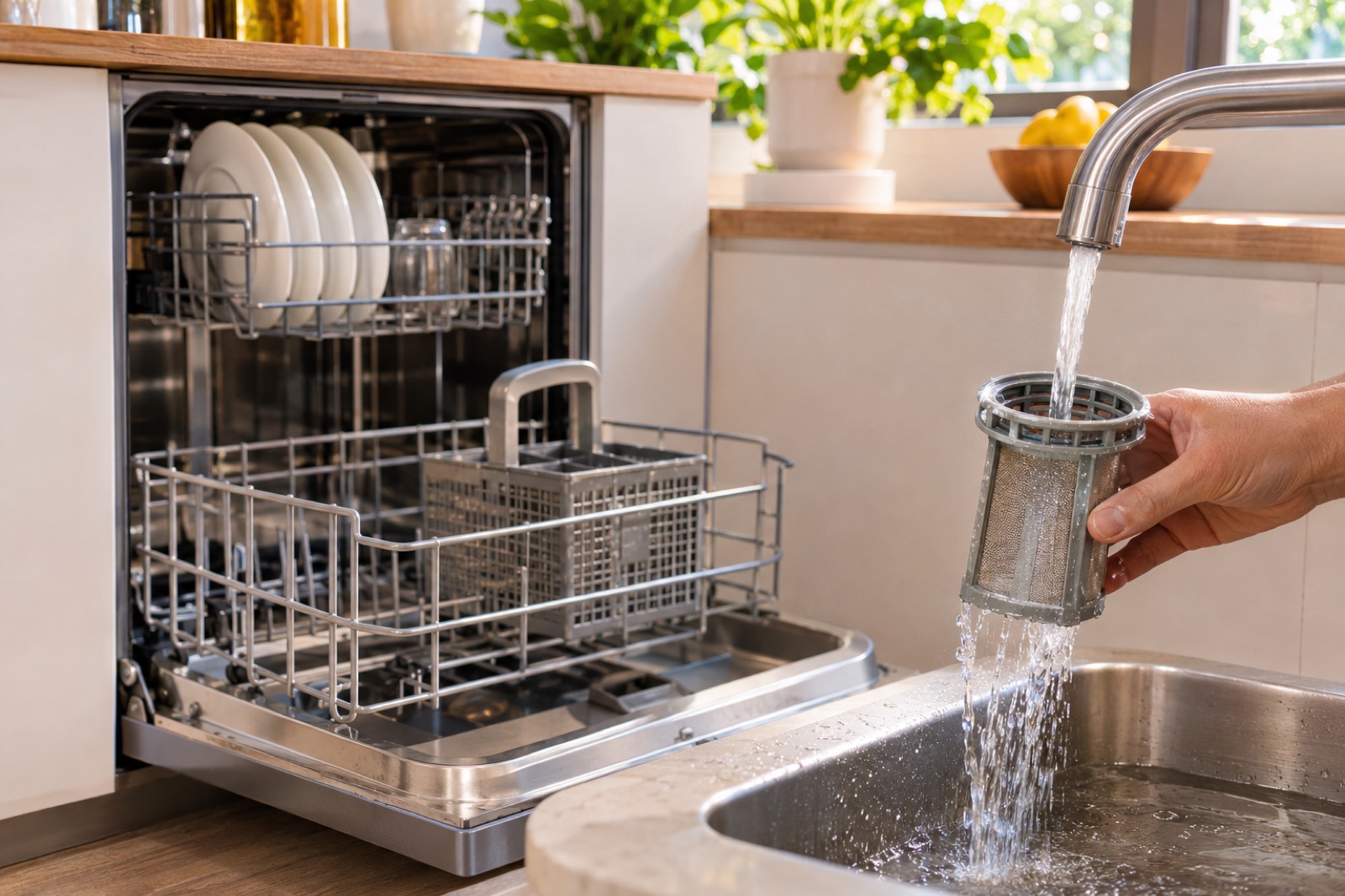
- Pull out the lower rack. Twist and lift out the filter as shown in the manual. It is usually a cylinder with a flat mesh under it.
- Rinse it under warm running water. Use a soft brush for grease. Do not use wire brushes.
- Refit it fully and lock it in place. A filter that is not seated properly can let debris into the pump.
Check 2: Spray arms
- Spin each arm by hand. It should turn freely without hitting anything.
- Look at the small holes. If they are blocked with food or limescale, remove the arm as described in the manual and clear the holes with a toothpick, then rinse.
- Make sure nothing hangs below the racks that could stop the arms, such as a pan handle or a utensil.
Check 3: Loading
- Face dirty surfaces towards the centre and the spray.
- Do not nest bowls or overlap plates.
- Keep large trays and boards from blocking the detergent dispenser door or the upper spray arm.
- Scrape off large food, but you usually do not need to rinse dishes first. Check your manual.
Check 4: Detergent, rinse aid and water
- Detergent: old or damp detergent works poorly. Make sure the dispenser opens during the wash, so there is no leftover tablet at the end.
- Rinse aid: an empty rinse-aid compartment leads to spots and wet dishes.
- Hard water: a white film on glasses often means limescale. Follow the manual's advice on water hardness, and run a descaling or machine-cleaner cycle if it recommends one.
- Hot water supply: if your dishwasher is connected to the hot water line, running the kitchen tap until it is hot before you start can help the first fill.
Signs of a real fault
- Dishes are cold and wet at the end of a normal programme: the heater or temperature sensor may have failed.
- A spray arm does not turn during the wash even though it spins freely by hand: the wash pump may be weak.
- The machine does not fill, fills very slowly, or shows a fill error: check that the water tap under the sink is fully open, then call for help.
- Water stays in the bottom after the cycle even with a clean filter: there may be a drain or pump problem.
- Any error code that comes back, a burning smell or a tripping breaker.
Before you book a technician, check whether the machine is still under warranty or affected by a recall. See what to check before you pay for a repair.
Repair or replace?
Heaters, pumps and sensors are usually replaceable parts. To decide, compare the full repair quote with the full replacement cost, including installation and removal, over the same number of years. Use the repair-or-replace calculator and our guide to the full cost of a new appliance.
Dishwasher not cleaning: symptoms and causes
| Symptom | Most likely cause | Fix |
|---|---|---|
| Grit or food on glasses | Clogged filter | Clean the filter |
| Dirty dishes in one area | Blocked spray-arm holes, loading | Clear holes, reload |
| White film that wipes off | Hard water, no rinse aid | Rinse aid, descale |
| Tablet left in dispenser | Dispenser blocked by a tall item | Change loading |
| Cold, wet dishes | Heater or sensor fault | Technician |
| Arm will not turn in a cycle | Weak wash pump | Technician |
A dishwasher not cleaning properly is usually one of the first four rows. The last two need a diagnosis.
Frequently asked questions
Why do my glasses come out cloudy?
Cloudiness that wipes off is usually limescale or detergent residue, which hard-water settings, rinse aid or a descaling cycle can help with. Cloudiness that does not wipe off may be etching of the glass itself, which cleaning cannot reverse.
Should I pre-rinse dishes?
Scraping off large food is enough for most modern dishwashers. Check your manual, because some sensor programmes work better with normally soiled dishes.
How often should I clean the filter?
Follow your manual. Many makers suggest a quick check every week or two, and a clean whenever you see debris or performance drops.
Sources
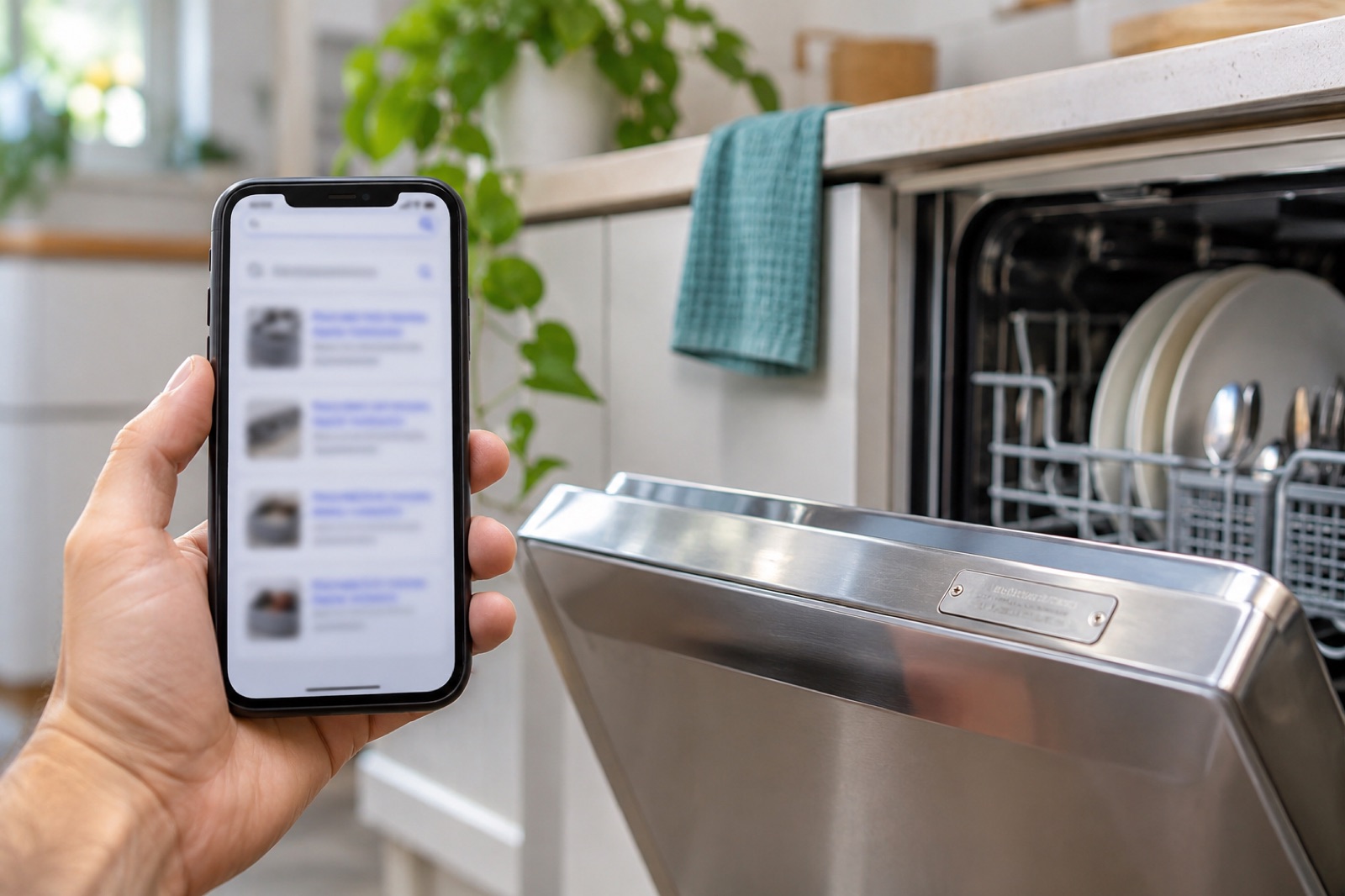
Check for a recall before you pay for a repair
A recall can mean a free fix or replacement. Search with the model number from the rating plate. “No match” does not prove a machine is safe.